
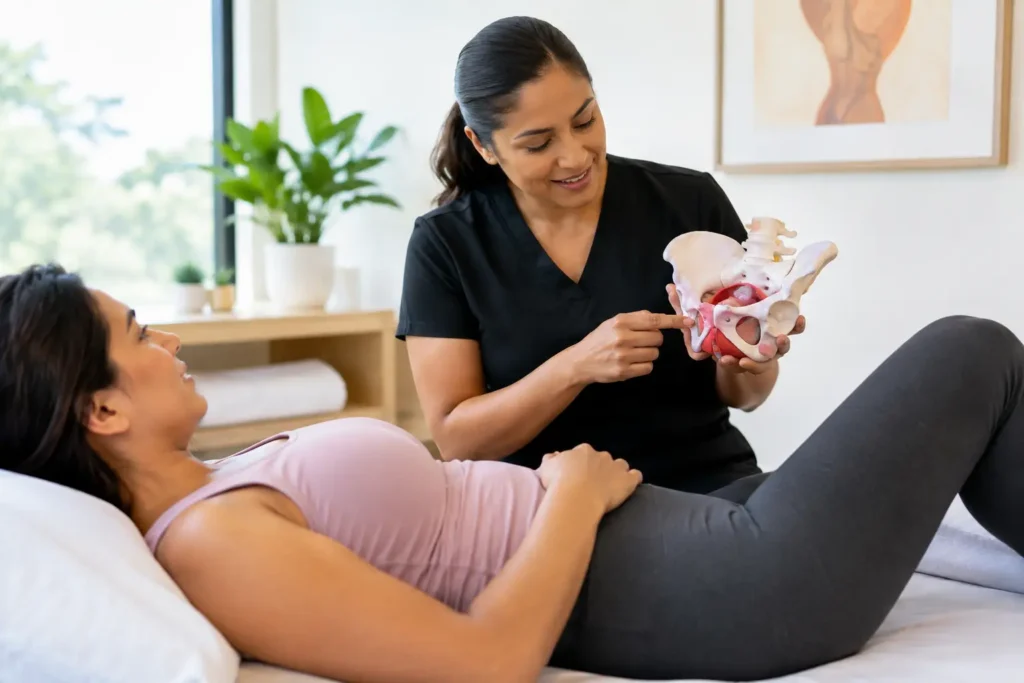
A sneeze, a laugh, a high-impact workout, or the rush to make it to the restroom should not leave you planning your life around your bladder. Understanding how pelvic floor therapy works can be the first step toward feeling more comfortable, supported, and confident in your body.
The pelvic floor is rarely a topic people bring up over coffee, yet it affects daily ease, intimacy, movement, recovery after childbirth, and confidence at every stage of adulthood. At Renew Med Spa & Beauty Clinic, we believe personal wellness deserves the same thoughtful attention as skin, body, and beauty concerns. A discreet, personalized conversation can help you understand which approach fits your goals and whether pelvic floor treatment is appropriate for you.
What the pelvic floor actually does
The pelvic floor is a group of muscles, connective tissues, and nerves that sit like a supportive hammock at the base of the pelvis. In women, these structures help support the bladder, uterus, and bowel. In men, they support the bladder and bowel while also contributing to sexual function.
These muscles need balance, not simply strength. They contract to help control urine and bowel movements, then relax to allow comfortable urination, bowel movements, and, for many women, comfortable penetration. They also work with the diaphragm, deep abdominal muscles, hips, and back to support posture and movement.
Pregnancy and childbirth can change how these muscles function, but they are not the only influences. Aging, hormonal shifts around menopause, chronic constipation, high-impact exercise, heavy lifting, pelvic surgery, persistent coughing, stress, and prolonged sitting can all play a role. Men may experience pelvic floor concerns following prostate treatment, as well as from strain, pain, or other changes in pelvic health.
How pelvic floor therapy works: assessment first
Pelvic floor therapy is not one identical treatment for everyone. It begins by identifying what is happening in your body and what you want to improve. For one person, the concern may be leakage while exercising. For another, it may be pelvic heaviness, urgency, discomfort, difficulty relaxing, or a loss of confidence after childbirth.
In a conventional pelvic health physical therapy setting, assessment may include questions about symptoms, medical history, bowel and bladder patterns, movement, breathing, posture, and daily habits. With informed consent, the therapist may also recommend an external or internal assessment to understand muscle tone, coordination, tenderness, and strength. You are always entitled to ask questions, decline any part of an examination, and understand what is being recommended.
That assessment matters because weak muscles and overly tense muscles can create similar symptoms. Repeatedly doing Kegels when the pelvic floor is already tight may worsen discomfort or make it harder to relax. The most effective plan is one that responds to your actual pattern rather than a one-size-fits-all routine found online.
Treatment can involve retraining, relaxation, and support
Once the concern is clearer, therapy aims to improve how the pelvic floor functions in real life. That may mean learning to gently activate the muscles, fully release them, coordinate them with breathing, or use them at the right moment during a cough, lift, or workout.
A pelvic health physical therapist may use education, guided exercises, manual techniques, posture and movement coaching, bladder retraining, and strategies for bowel habits. If the concern is leakage with exercise, the goal may be better timing and coordination before impact. If pain or tightness is the issue, the early focus may be breathing, relaxation, mobility, and reducing muscle guarding rather than strengthening.
Some people are advised to use biofeedback. This method uses sensors to provide visual or sound cues about muscle activity, helping patients recognize whether they are contracting or releasing effectively. Electrical stimulation may also be considered in select cases, but it is not the right choice for everyone and should be discussed in light of your medical history.
Progress is usually gradual. Muscles and nervous-system patterns respond to consistent practice, not a single appointment. A plan may evolve over several weeks, especially when symptoms have been present for a long time or are connected to childbirth, surgery, hormonal changes, or chronic pain.
Where noninvasive pelvic floor wellness treatments fit
Many clients exploring pelvic floor wellness are curious about noninvasive technology-based treatments. Depending on the services available and your individual needs, these may use focused electromagnetic energy to stimulate deep pelvic floor contractions while you remain fully clothed and seated. The intention is to support muscle engagement without surgery, needles, or downtime.
This approach can feel appealing for busy women and men in Trinidad and Tobago who want a private, convenient way to prioritize wellness. Still, it is not a replacement for a full medical evaluation when symptoms are new, severe, painful, or complex. A technology-based session and hands-on pelvic health physical therapy serve different purposes. Sometimes they can complement one another; sometimes physical therapy or medical care should come first.
At Renew Med Spa & Beauty Clinic, honest recommendations matter. During a consultation, the focus should be on your concerns, health history, comfort, and desired outcome – not on promising a universal result. The best path may include pelvic floor wellness treatment, guided exercise, referral for pelvic health physical therapy, medical assessment, or a combination of care.
Who may benefit from pelvic floor support?
People often seek pelvic floor care after noticing bladder leaks when they laugh, jump, run, or lift. Others are bothered by frequent urges to urinate, a sensation of pelvic pressure, reduced confidence during intimacy, or changes after pregnancy and childbirth. Men can also experience bladder-control and pelvic health concerns that deserve respectful, individualized attention.
You do not need to wait for symptoms to feel dramatic before asking questions. Early support may help you better understand your body and make informed choices about movement, fitness, recovery, and treatment. That said, pelvic floor therapy is not an appropriate self-diagnosis for every pelvic symptom.
Contact a physician promptly for blood in the urine, fever, sudden inability to urinate, severe pelvic pain, a new pelvic bulge, unexplained bleeding, numbness in the saddle area, or new loss of bowel control. These symptoms need medical evaluation rather than a cosmetic or wellness treatment alone.
What to expect from your first conversation at Renew
A comfortable experience begins with discretion. When you speak with Renew Med Spa & Beauty Clinic, be ready to share the concern that brought you in, whether it is leakage, postpartum changes, urgency, confidence, or a desire to learn about preventive support. You may also be asked about pregnancy status, prior surgeries, implanted devices, current health conditions, and medications, as these details can affect what is suitable.
This is also the time to be clear about your expectations. Ask what the recommended treatment is designed to address, how many sessions may be suggested, what sensations to expect, whether any downtime is involved, and how results are measured. Thoughtful care leaves room for questions. It should never make you feel rushed or embarrassed.
Pelvic floor wellness is deeply personal, but it does not need to be isolating. Feeling supported in your body can change how you move through work, exercise, social plans, and intimate moments. The right care is not about perfection. It is about restoring comfort, control, and the freedom to feel like yourself.
To discuss a personalized pelvic floor wellness consultation at Renew Med Spa & Beauty Clinic in Trinidad and Tobago, book by WhatsApp at (868)767-3639 or call (868)615-7947. A confident next step can begin with one private conversation.
Authored by Ravina Maharaj Ramsahai, Founder / Director – Renew Med Spa & Beauty Clinic