
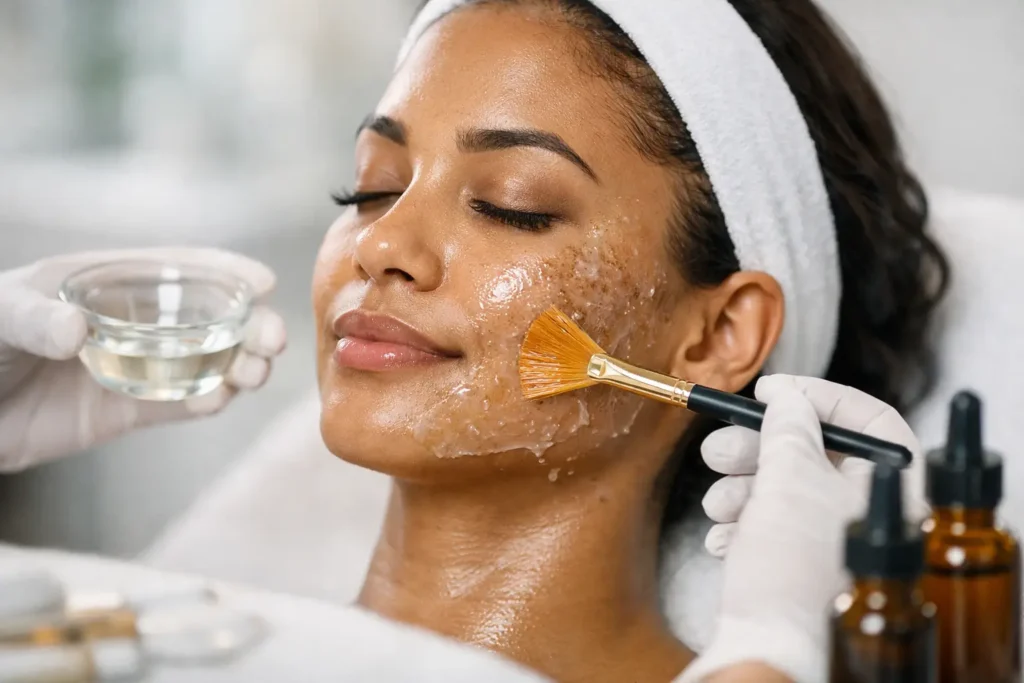
Dark spots rarely feel like a major skin issue until they start outlasting every breakout, every sunny weekend, and every brightening serum on your shelf. If you have been weighing a chemical peel for hyperpigmentation, the real question is not whether peels can work. It is whether the right peel, at the right strength, for the right skin tone and concern, can improve discoloration without creating new irritation.
At Renew Med Spa & Beauty Clinic, that distinction matters. Hyperpigmentation is not one-size-fits-all, and treating it well takes more than choosing the strongest option available. It takes a personalized approach that respects your skin, your goals, and your comfort with downtime.
How a chemical peel for hyperpigmentation actually works
Hyperpigmentation happens when the skin produces excess melanin in certain areas. That can show up as post-acne marks, sun spots, melasma, or uneven patches left behind after irritation. A chemical peel helps by applying a controlled exfoliating solution to the skin, which encourages old, pigmented cells to shed and healthier new skin to surface.
That sounds simple, but the outcome depends on the depth of the peel and the reason the pigmentation developed in the first place. Superficial peels can gradually brighten mild discoloration with little downtime. Medium-depth peels can target more noticeable unevenness, but they also demand more caution, especially in melanin-rich skin.
This is why peels are not just about exfoliation. They are about strategy. The wrong peel, or even the right peel used too aggressively, can trigger inflammation and make pigment worse instead of better.
Not all hyperpigmentation responds the same way
One of the biggest mistakes people make is treating all discoloration as if it behaves the same. It does not. Post-inflammatory hyperpigmentation from acne often responds differently than melasma, and sun damage can need a different pace than pigmentation tied to hormonal shifts.
If your marks are left behind after breakouts or minor skin trauma, a series of gentle peels may gradually improve overall clarity. If you are dealing with melasma, results can be more delicate. Melasma is known for recurring, especially with heat, sun exposure, and hormonal triggers. In those cases, a chemical peel may help brighten the skin, but it usually works best as part of a broader treatment plan rather than a one-time fix.
Skin tone also matters. Deeper skin tones can absolutely benefit from chemical peels, but they require thoughtful product selection, careful prep, and a conservative approach. That is especially relevant in Trinidad and Tobago, where regular UV exposure can make pigment concerns harder to control if aftercare is inconsistent.
What kind of peel is best?
There is no universal best peel for hyperpigmentation. The better question is which type suits your skin condition, tone, sensitivity level, and lifestyle.
Superficial peels are often the most practical starting point. These may use acids such as glycolic, lactic, mandelic, or salicylic acid to refresh the surface of the skin and improve mild uneven tone over time. They are popular because they can offer visible brightening with minimal interruption to your routine.
Medium-depth peels go further into the skin and can create more dramatic improvement, but they also come with more downtime and more risk. For some clients, they are appropriate. For others, especially those prone to post-inflammatory pigmentation, slower and steadier is the smarter path.
A good treatment plan does not chase intensity. It chases results with control.
What to expect after a chemical peel for hyperpigmentation
Most clients want to know two things right away: will I peel, and when will I see a difference? The answer to both depends on the peel used.
After a light peel, your skin may feel tight, look slightly pink, and flake lightly for a few days. Some people peel visibly, while others simply notice smoother texture and a fresher look. Medium peels usually involve more noticeable shedding and a longer recovery period.
Improvement in hyperpigmentation is usually gradual. You may see an initial glow after the first session, but pigment often fades in stages. A series is commonly needed, along with strict sun protection and home care that supports the treatment instead of working against it.
That is where expectations matter. A peel can absolutely help brighten and refine the skin, but it is not magic in one appointment. The most satisfying results usually come from consistency.
When a peel is a strong option and when it is not
A chemical peel can be a strong choice if your pigmentation is superficial, your skin barrier is healthy, and you are ready to follow aftercare closely. It can also be a beautiful option if you want improvement in tone, texture, and overall radiance rather than just spot correction.
It may not be the best starting point if your skin is currently inflamed, highly sensitive, actively breaking out in a severe way, or compromised from overuse of exfoliating products. If you are expecting a peel to erase years of melasma in one session, that expectation needs to be reset. In some cases, combining peels with other brightening strategies may make more sense than relying on one treatment alone.
This is one reason expert assessment matters so much. Elegant results come from precision, not guesswork.
Risks to think about before booking
Chemical peels are widely used, but they are still real skin treatments with real risks. The most common issues include irritation, prolonged redness, dryness, peeling, and temporary sensitivity. More significant concerns include burns, infection, and worsening pigmentation when the skin is treated too aggressively or cared for poorly afterward.
Sun exposure is one of the fastest ways to undo progress. Freshly treated skin is more vulnerable, and even a beautiful peel can lead to disappointing results if you skip sunscreen or spend too much time in direct heat too soon.
There is also the temptation to stack too many actives at home. Retinoids, scrubs, acids, and brightening products can all be helpful at the right time, but layering them around a peel without guidance can leave the skin irritated and reactive. Sometimes the best support is a simpler routine, not a stronger one.
Why customization matters more than trends
Social media has made chemical peels look quick, universal, and easy to self-diagnose. In reality, the peel your friend loved may be completely wrong for your skin. The right choice depends on the pattern of pigmentation, your history with sensitivity, your natural skin tone, and how much downtime you can realistically manage.
That is why personalized care matters at Renew Med Spa & Beauty Clinic. A luxury experience should never come at the expense of safety, and effective skin correction should never feel rushed. The goal is refined, healthy-looking skin that still looks like you, just clearer, brighter, and more even.
For many clients, that means building results gradually. A carefully spaced series of lighter treatments often creates a more elegant outcome than one overly aggressive session. It may ask for more patience, but it often protects your skin and your confidence in the process.
The best way to make results last
A peel can start the improvement, but maintenance protects it. Daily sunscreen is non-negotiable if hyperpigmentation is your concern. So is resisting the urge to pick at blemishes, over-exfoliate, or change products too often.
You also want to pay attention to triggers. For some people, acne is the main source of new spots. For others, it is heat, sun, or hormonal shifts. Understanding what keeps your pigment active helps shape a smarter long-term plan.
If you are considering a chemical peel for hyperpigmentation and want an approach that feels polished, personalized, and grounded in expert care, book your consultation with Renew Med Spa & Beauty Clinic. For appointments, WhatsApp (868)767-3639 or call (868)615-7947.
Clearer skin is not about forcing a transformation overnight. It is about choosing treatments that respect your skin enough to reveal its natural radiance, one well-planned step at a time.
Authored by Ravina Maharaj Ramsahai, Founder / Director — Renew Med Spa & Beauty Clinic