
You can eat well, stay active, and still notice the same pockets of fullness at the abdomen, flanks, thighs, or under the chin. That is usually the moment people start asking, does fat reduction body contouring work, or is it just another beauty promise that sounds better than it performs? The honest answer is yes, it can work very well – but only when the treatment matches the concern, the provider sets realistic expectations, and the goal is refinement rather than dramatic weight loss.
Non-surgical body contouring has earned its place because it addresses a frustrating reality: some fat deposits do not respond easily to lifestyle habits alone. These treatments are designed to target stubborn fat cells in specific areas, helping create a smoother, more sculpted shape without surgery, long recovery, or an artificial-looking result. For many women, that matters just as much as the inches lost. They want to feel more confident in fitted clothing, more balanced in their proportions, and more at ease in their own skin.
Does Fat Reduction Body Contouring Work for Everyone?
Not in the exact same way, and that is where most confusion begins. Body contouring is not a one-size-fits-all solution. It works best for healthy adults who are already close to their goal weight but want help with localized fullness that lingers despite consistent effort.
If someone expects a contouring treatment to replace weight loss, the experience may feel disappointing. These services are meant to sculpt, not completely transform the body overnight. On the other hand, if the goal is to soften a lower belly pouch, slim the waistline, refine the thighs, or improve definition in a small area, the right treatment plan can be very rewarding.
This is why consultation matters. A polished result starts with understanding whether the issue is actually fat, skin laxity, muscle separation, fluid retention, or a mix of concerns. Sometimes fat reduction is the answer. Sometimes skin tightening or another approach needs to be part of the plan.
How Fat Reduction Body Contouring Works
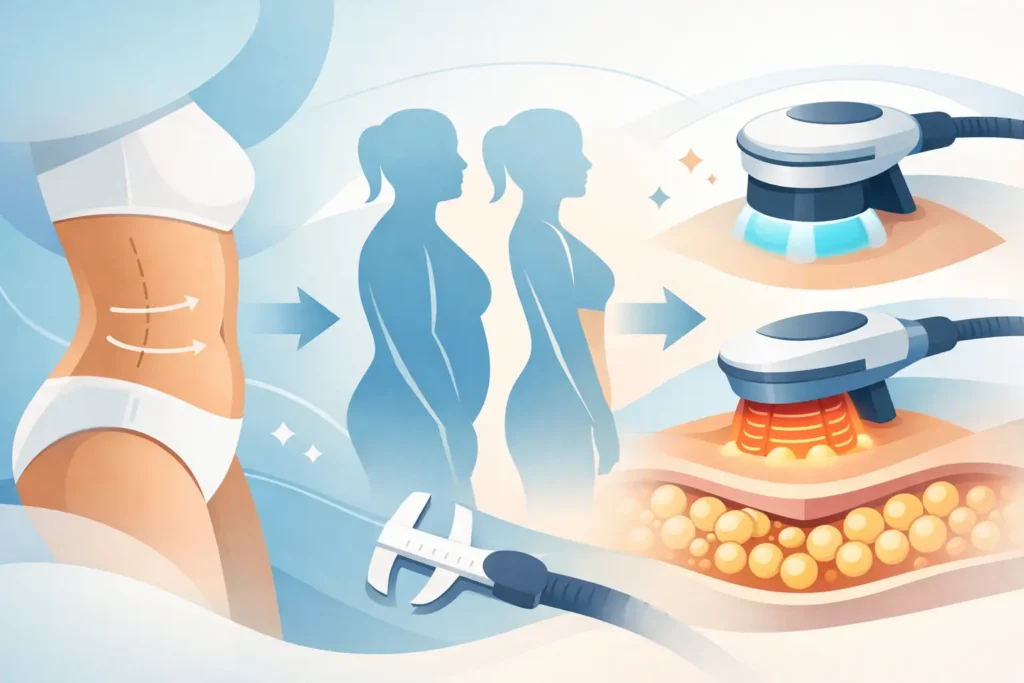
Most non-surgical fat reduction treatments are designed to damage or disrupt targeted fat cells without harming the surrounding skin and tissue. The body then processes and removes those affected cells over time. That means results are gradual, not instant.
Depending on the technology used, treatments may rely on cooling, heat, ultrasound, radiofrequency, or other advanced methods. While the mechanism differs, the goal is similar: reduce stubborn fat in a focused area and improve contour.
That gradual timeline is actually one reason many clients prefer these options. The change can appear more natural, as though the body is simply becoming more toned and balanced over several weeks. For women who want visible improvement without the downtime or intensity of surgery, that is often the sweet spot.
Still, gradual does not mean minor. In the right candidate, body contouring can create a noticeable difference in how clothes fit and how the silhouette looks from multiple angles. The waist may appear more defined. The lower abdomen may look flatter. The bra line or inner thighs may feel less bulky. Those details can make a meaningful difference in confidence.
What Results Can You Realistically Expect?
The best results are usually subtle to moderate, elegant rather than extreme. Think refinement, not reinvention.
A successful treatment can reduce fullness in a treated area, improve proportion, and create a smoother overall shape. It may help with that one stubborn zone that has never quite matched the rest of your progress. What it typically will not do is produce the kind of dramatic reduction associated with liposuction or major weight loss.
Results also depend on the area being treated. Smaller areas often show contour changes more quickly, while larger areas may need multiple sessions. Some clients notice visible improvement within a few weeks, while others see the full effect over a couple of months as the body continues to clear disrupted fat cells.
Lifestyle matters too. Once fat cells are reduced, they do not simply bounce back in the same way, but remaining fat cells can still expand if weight increases significantly. That is why maintenance is part of the conversation. The treatment can elevate your shape, but your habits help protect the result.
Why Some People Love Their Results and Others Do Not
When body contouring earns glowing reviews, there is usually a pattern behind it. The person was a good candidate, understood the timeline, and chose treatment for the right reason. They wanted a finishing touch, not a miracle.
Disappointment tends to happen when expectations are too high or the diagnosis is off. For example, someone may think fat is the main issue when loose skin is actually the bigger concern. In that case, reducing volume alone may not deliver the smooth, taut look they had in mind.
Provider expertise also changes the experience. Body contouring is not just about using a machine. It is about evaluating shape, symmetry, skin quality, and treatment placement with a trained aesthetic eye. Luxury results come from personalization.
That is especially important for women who are balancing multiple goals at once, such as slimming the midsection while preserving natural curves, or refining the thighs without creating an overtreated appearance. The right plan respects your proportions and enhances what already suits you.
Who Is a Good Candidate?
In general, ideal candidates are near their stable weight, have good skin elasticity, and want improvement in defined problem areas. They are looking for a non-surgical option because they value convenience, lower downtime, and a more comfortable treatment experience.
Women often seek body contouring after pregnancy, after weight loss, before a wedding or vacation, or simply during a season of prioritizing themselves again. Those motivations are all valid. The key is understanding what the treatment can realistically deliver within your timeframe.
If a major event is approaching, planning ahead matters. Because results build over time and multiple sessions may be recommended, waiting until the last minute is rarely ideal. A thoughtful schedule gives the body time to respond and gives your provider room to refine the plan if needed.
What Body Contouring Cannot Do
A confident decision starts with honesty. Non-surgical fat reduction cannot replace healthy living. It cannot guarantee dramatic inch loss everywhere. It cannot treat obesity, and it cannot solve every texture or laxity concern on its own.
It also cannot promise perfectly identical results from person to person. Bodies respond differently based on metabolism, treatment area, body composition, and how consistently you maintain your routine afterward.
That does not make the treatment less effective. It simply means effectiveness should be measured correctly. If the goal is strategic sculpting, body contouring can be impressive. If the goal is total body transformation without effort, it is the wrong category of treatment.
Is It Worth It?
For the right person, yes. Body contouring can be worth it because it addresses a very specific frustration that diet and exercise may not fully resolve. It gives women a non-surgical way to feel more polished, more balanced, and more confident in their shape.
The value is not only in the visible change. It is in the way a dress fits more smoothly, the way tailored clothing sits at the waist, or the way you stop fixating on one area that has been bothering you for years. When a treatment helps you feel more aligned with the effort you already put into caring for yourself, that has real value.
At Renew Med Spa & Beauty Clinic, that philosophy matters. The most beautiful results are the ones that still look like you – just more refined, more confident, and more at ease.
Questions to Ask Before You Book
Before choosing any treatment, ask what technology is being used, how many sessions may be needed, what kind of timeline to expect, and whether your concern is truly fat or partly skin laxity. Ask to discuss realistic outcomes for your body, not just idealized before-and-after scenarios.
You should also ask what happens after treatment. Some plans benefit from hydration, movement, or complementary services that support the contouring process. A personalized approach almost always outperforms a generic one.
The strongest results come from a plan that is tailored to your body, your goals, and your lifestyle. That is how treatment feels less like chasing perfection and more like investing in yourself with intention.
If you have been wondering whether body contouring really works, the better question may be whether it works for your body, your goals, and your expectations. When those pieces align, the result can feel less like a trend and more like a quiet, beautiful shift in confidence.